Can Your Employer Average Overtime Over Two Weeks? The FLSA Workweek Rule
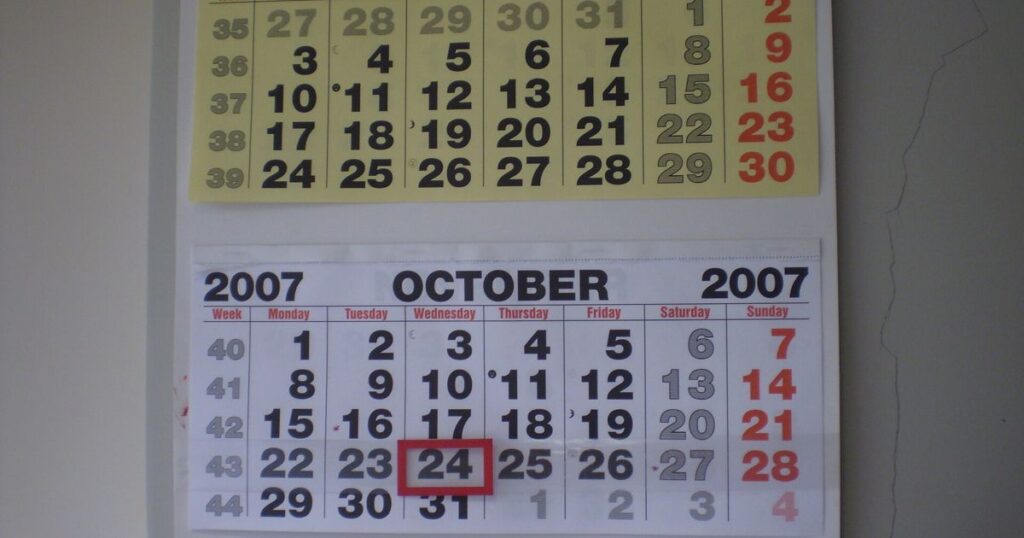
Can your employer average overtime over two weeks? The FLSA workweek rule
Biweekly paychecks lead to a common question: if you worked 30 hours one week and 50 the next, is that just 80 hours and no overtime? Under the federal Fair Labor Standards Act, the answer is no. The Labor Department’s interpretive rules in 29 CFR 778.103, 29 CFR 778.104 and 29 CFR 778.105 explain why.
- 29 CFR 778.104: the Act takes a single workweek as its standard and does not permit averaging of hours over 2 or more weeks.
- The regulation’s own example: an employee who works 30 hours one week and 50 hours the next must receive overtime for the hours over the maximum in the second week, even though the two-week average is 40.
- This applies whether pay is daily, weekly, biweekly, monthly or another basis, on standard or swing shifts, and also to pieceworkers and commission employees.
- 29 CFR 778.105: a workweek is a fixed, regularly recurring period of 168 hours — seven consecutive 24-hour periods — that can start on any day and hour, and once set it stays fixed unless changed permanently and not to evade overtime.
Total all hours in the workweek
29 CFR 778.103 says that if, in any workweek, an employee is covered by the Act and not exempt from overtime, the employer must total all hours worked in that workweek — even if two or more unrelated job assignments were performed — and pay overtime for each hour over the maximum. For an employee employed jointly by two or more employers, all hours worked for those employers in the workweek are totaled.
Each workweek stands alone
29 CFR 778.104 is direct: the Act “does not permit averaging of hours over 2 or more weeks.” Its example is 30 hours in week one and 50 in week two: overtime is due for the hours over the maximum in week two even though the average is 40. The rule applies regardless of whether the employee is paid daily, weekly, biweekly, monthly or on another basis, and regardless of a standard or swing-shift schedule. It applies to pieceworkers and commission employees too, so their hours and earnings must be determined week by week.
What a workweek is
29 CFR 778.105 defines the workweek as a fixed and regularly recurring period of 168 hours — seven consecutive 24-hour periods. It need not match the calendar week; it may begin on any day and at any hour. An employer may use one workweek for a whole establishment or different workweeks for different employees or groups. Once the start is set, it stays fixed regardless of the hours worked, and it may be changed only if the change is intended to be permanent and not designed to evade overtime.
How to check your pay stub
- Ask HR when your workweek starts (day and hour).
- Split each pay period into its two workweeks and total the hours in each.
- Hours over 40 in either week should show as overtime, even if the two-week total is 80 or less.
- If you have two jobs with joint employers, ask whether the hours are combined.
Related: overtime pay rules and bonuses and the regular rate. Exempt salaried employees and state laws (some with daily overtime) follow different rules. General information, not legal advice.
Header image: Photo: “WallCalendar” by Claudio Elias, PUBLIC DOMAIN (cropped).
Related guides
Sleep Time on 24-Hour Shifts: When Federal Law Says It Must Be Paid
Under federal FLSA rules, an employee on duty for less than 24 hours is working even if allowed to sleep. On shifts…
Time Clock Rounding and Early Punch-Ins: What Federal Rules Allow
Federal rules accept rounding punches to the nearest 5 minutes, tenth or quarter hour only if, over time, it does not shortchange…
The Portal-to-Portal Act: When Commute Time and Before-Shift Tasks Are Not Hours Worked
29 U.S.C. 254, part of the Portal-to-Portal Act, relieves employers of FLSA minimum-wage and overtime liability for ordinary commuting and for certain…