Employers Plan 3.5% Raises for 2027. Here’s How to Get More Than the Average

If you are waiting to hear what your raise will be in January, the big compensation surveys have already told you what your employer is probably planning: about 3.5%. Payscale, Mercer and The Conference Board all land on that number for 2027 salary increase budgets, and WTW is close behind at 3.4%. It is the fourth year in a row that budgets have barely moved.
That sounds like bad news, and for a lot of workers it will be. But a budget is an average, not a rule. The same surveys show that employers plan to split the money unevenly, and that is where your opening is. Here is what the 2027 numbers actually say and how to end up on the right side of them.
What the 2027 salary surveys show
- Payscale: U.S. employers plan average increases of 3.5% for 2027, up only 0.1 point from the 3.4% they say they actually gave in 2026. Its survey covered 1,266 organizations. Notably, employers gave less in 2026 than the 3.5% they predicted a year earlier.
- The Conference Board: its 41st annual survey puts the median 2027 salary increase budget at 3.5%, unchanged from 2026, with a median merit budget of 3.1%. The gap between the two is set aside for retention adjustments and promotions.
- Mercer: projects a 3.2% average merit budget and a 3.5% total increase budget for 2027, and points out that 87% of the budgets it collected were still preliminary in July.
- WTW: projects 3.4% for 2027, a touch below the 3.5% it recorded as actual 2026 increases.
Put simply, the typical “merit” raise most people get in an annual review is closer to 3.1% to 3.2%. The rest of the pool is held back for people the company decides it needs to promote, keep or bring up to market.
Why 3.5% may not feel like a raise
A raise only helps if it beats rising prices. The October consumer price index rose 0.4% in a single month, more than economists expected, after a 0.6% jump in September, according to CNBC’s coverage of the Bureau of Labor Statistics report. Because of last year’s government shutdown, BLS did not publish an official year-over-year rate for October, but three straight months of brisk increases mean a 3% raise can easily be eaten up. We covered the same squeeze in our look at how real wages fell in the latest Employment Cost Index.
In other words, an average raise in 2027 may only keep you even. To actually get ahead, you need to be one of the people who gets more than the average.
Where the extra money is going
Every one of these surveys makes the same point to employers: with a flat budget, spread the money more selectively. The Conference Board tells companies to treat the 3.5% median as “a planning anchor rather than a universal pay strategy” and to set aside separate pools for promotions, retention, market gaps and pay equity. Mercer says that when the pool isn’t growing, the quality of how it is allocated matters more.
The Conference Board also found which skills are most often driving base-pay adjustments:
- AI skills: 37.8% of companies
- Leadership and people-management skills: 30.7%
- Data science and advanced analytics: 30.4%
If your work touches any of these, say so in writing before budgets are final. Our guide to the AI skills pay premium for 2027 goes deeper on how to document that kind of value.
Switching jobs still pays more than staying
The other way to beat the average is to change employers. The Federal Reserve Bank of Atlanta’s Wage Growth Tracker shows that in September 2026, the median worker who switched jobs saw hourly pay grow 4.7% over the past year, compared with 3.4% for workers who stayed put. That 1.3-point gap is real money over a career, and it is roughly the difference between keeping up with inflation and falling behind. (The Atlanta Fed will skip its October update because shutdown-era data from October 2025 is missing; the tracker resumes with November data.)
You don’t have to quit to use this. A credible outside offer, or even solid market data, is often what moves a manager from the standard merit number to a retention adjustment.
How to get more than 3.5% this cycle
- Ask now, not in January. Mercer found most budgets were still preliminary over the summer, and many companies finalize individual increases in late fall and December. Once the numbers are locked, changing yours is much harder. Tell your manager this week that you want to talk about your 2027 pay.
- Ask about the other pools, not just merit. Merit budgets are about 3.1% to 3.2%. Ask directly whether there is a market adjustment, equity adjustment or promotion budget, and what it would take to qualify. That is where the money above average lives.
- Bring a market number. Pull the posted pay ranges for your role from job listings in your area. In states with pay transparency laws, they are easier to find than ever. Our piece on using posted salary ranges to get a bigger raise walks through how.
- Tie your ask to results. Managers are being told to direct money to critical roles and skills. Show a few concrete outcomes from this year, like revenue, savings, projects shipped or people trained, and connect them to what the company says it needs next year.
- Know your real raise. Compare any offer against inflation. If you are offered 3% while prices are rising faster, you are being asked to take a pay cut in real terms, and it is fair to say so politely.
- Have a fallback. If base pay is capped, ask for a promotion timeline, a review in six months, a one-time bonus, extra PTO or training paid for by the company. Get any promise in writing.
The bottom line
Employers are planning about 3.5% for 2027 raises, the same range as the last few years, and a typical merit increase will be closer to 3%. That pool is not shared evenly. Workers with in-demand skills, a clear record of results and a market number in hand are the ones who get the retention and promotion money. Start the conversation before your company finalizes its budget, and if the answer is still the average, remember that job switchers are getting more than a point extra by moving.
Sources: Payscale 2026-2027 Salary Budget Survey; The Conference Board, US Salary Increase Budgets 2026-2027; Mercer QuickPulse U.S. Compensation Planning Survey; WTW; CNBC on the October 2026 CPI; Federal Reserve Bank of Atlanta Wage Growth Tracker via FRED.
Related guides
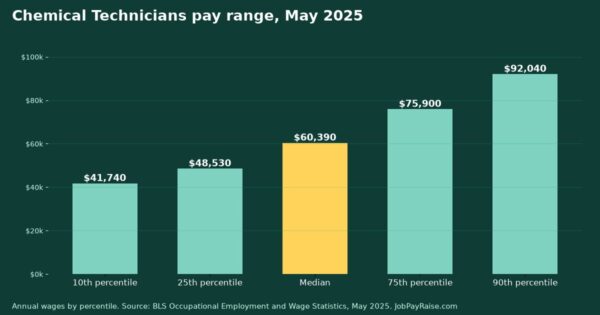
How Much Do Chemical Technicians Make? 2025 Pay by Percentile, State, City and Industry
What chemical technicians earn in 2025: median pay of $60,390 a year ($29.03/hour), the full pay range, top-paying states, metro areas and…
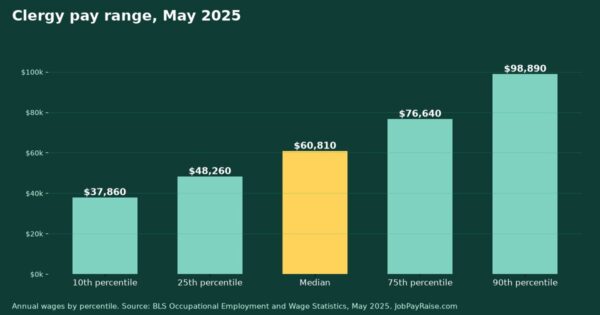
How Much Do Clergy Make? 2025 Pay by Percentile, State, City and Industry
What clergy earn in 2025: median pay of $60,810 a year ($29.24/hour), the full pay range, top-paying states, metro areas and industries,…
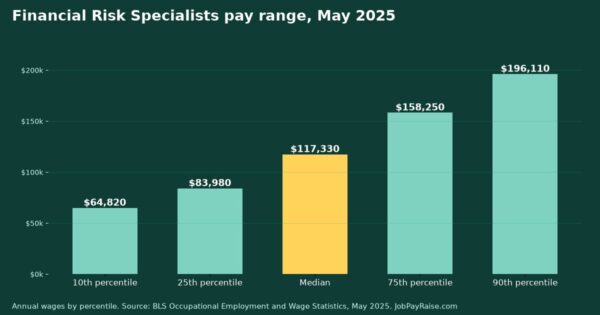
How Much Do Financial Risk Specialists Make? 2025 Pay by Percentile, State, City and Industry
What financial risk specialists earn in 2025: median pay of $117,330 a year ($56.41/hour), the full pay range, top-paying states, metro areas…