Owed Unpaid Wages or Overtime? How to File a Federal Wage Complaint (and the 2-Year Deadline)
Owed unpaid wages or overtime? How to file a federal wage complaint
Missing overtime, off-the-clock work, or a final check that never came can add up to thousands of dollars. Before you write it off, know that the federal Department of Labor investigates wage complaints for free, and that the clock on your claim is already running.
- The DOL Wage and Hour Division (WHD) takes complaints at 1-866-487-9243; complaints are confidential.
- Retaliating against a worker for filing a complaint or cooperating with an investigation is illegal.
- Federal minimum-wage and overtime claims generally must be brought within 2 years, or 3 years for willful violations.
Step 1: gather information
U.S. Department of Labor, Wage and Hour Division: How to File a Complaint says the more information you provide, the better it can address the problem. Useful items:
- Your name, address and phone number, and the company’s name, location, phone number and a manager’s or owner’s name.
- How and when you were paid (for example, cash or check, every Friday).
- The type of work you did, and your own record of the dates and hours you worked. A simple daily log or calendar notes help.
- Pay stubs or other pay records (see how to read your pay stub).
Step 2: file
Call 1-866-487-9243. The DOL says its services “are free and confidential, whether you are documented or not.” WHD says it will work with you to answer questions and decide whether an investigation is the best course. Complaints are confidential: “The name of the complainant, the nature of the complaint, and whether a complaint exists may not be disclosed.” And an employer “cannot retaliate against a worker for exercising their rights, filing a complaint or cooperating with an investigation.”
What an investigation looks like
- Initial conference with the employer, and a tour of the workplace.
- Private interviews with employees.
- Records review to check compliance.
- Final conference to discuss any violations and how to fix them. If back wages are owed, the investigator asks the employer to pay them.
WHD also picks some businesses and industries for investigation on its own, focusing on low-wage industries with high violation rates.
Don’t wait: the deadline
Under 29 U.S.C. 255 (Cornell LII), an action for unpaid minimum wages, unpaid overtime or liquidated damages under the Fair Labor Standards Act must be started “within two years after the cause of action accrued,” except that a willful violation can be brought “within three years.” In practice, each late or short paycheck starts its own clock, so older pay periods drop off as time passes.
Common problems worth reporting
- Unpaid overtime for nonexempt workers over 40 hours a week.
- Work before clock-in or after clock-out, or automatic meal deductions when you worked through lunch (see are breaks paid under federal law?).
- Uniform or tool deductions that push pay below minimum wage (see uniform and tool deductions).
- Unpaid travel time between job sites (see travel time pay rules).
State labor departments enforce state wage laws, which can be stronger than federal law, such as rules on final paychecks (see final paycheck rules). You can also talk with an employment attorney about a private lawsuit.
General information, not legal advice. State laws vary; check your state labor department or an employment attorney for your situation.
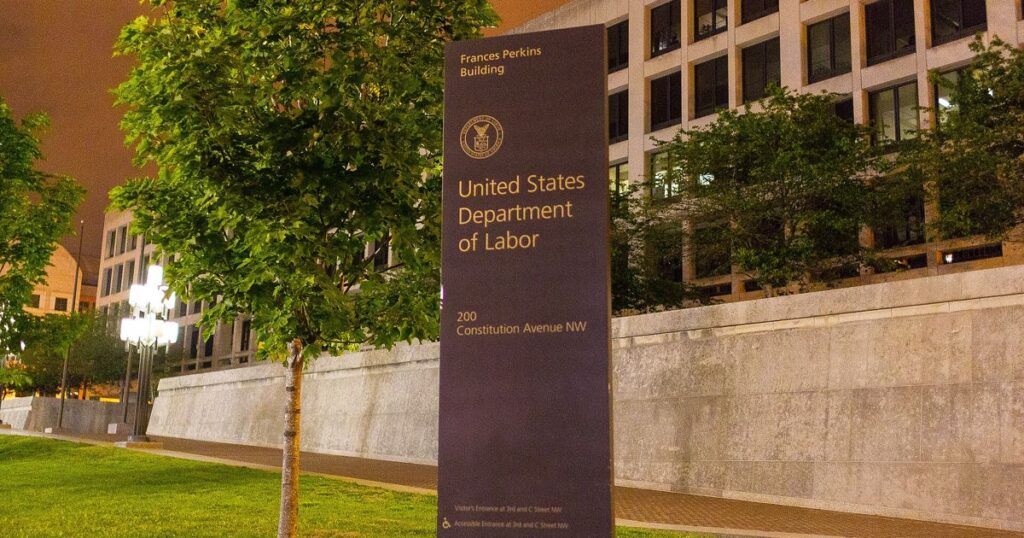
Header image: Photo: “Frances Perkins Building of the United States Department of Labor in Washington,” by US Department of Labor, CC BY 2.0 (cropped).