How Much Do Biological Science Teachers, Postsecondary Make? 2025 Pay by Percentile, State, City and Industry
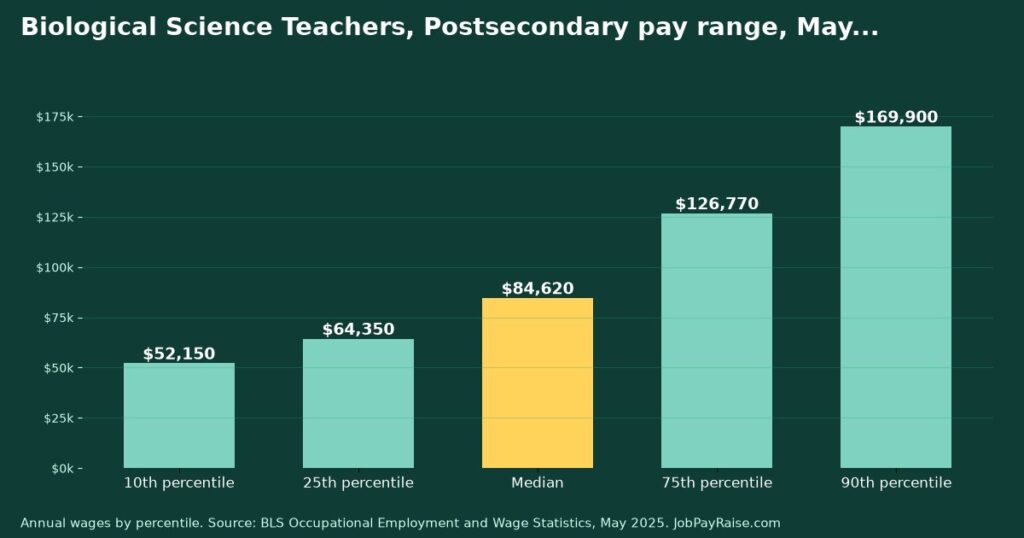
- The median annual wage for biological science teachers, postsecondary was $84,620 in May 2025, compared with $50,980 for all U.S. occupations.
- The lowest-paid 10% earned less than $52,150; the top 10% earned more than $169,900.
- BLS projects employment to change by 7.3% from 2025 to 2035, with about 4.7 thousand openings a year.
About 50,190 people worked as biological science teachers, postsecondary in the United States in May 2025, according to the federal government’s BLS OEWS national data, May 2025. Here is what they earn, from entry level to the top of the field, and where the pay is highest. Projections and training requirements come from the BLS Occupational Outlook Handbook: Biological Science Teachers, Postsecondary and BLS Employment Projections, 2025–35.
The full pay range
| Percentile | Hourly | Annual |
|---|---|---|
| 10th (entry level / lowest paid) | annual only* | $52,150 |
| 25th | annual only* | $64,350 |
| 50th (median) | annual only* | $84,620 |
| 75th | annual only* | $126,770 |
| 90th (most experienced / best paid) | annual only* | $169,900 |
| Mean (average) | annual only* | $102,840 |
A percentile wage means that share of workers earn less. For example, 25% of biological science teachers, postsecondary earned less than $64,350. BLS wage estimates do not include overtime, tips or most bonuses.
* The OEWS program releases only annual wages for some occupations that typically work fewer than 2,080 hours per year but are paid on an annual basis, such as teachers, pilots, and athletes (BLS OEWS field descriptions, May 2025 data file).
States where biological science teachers, postsecondary earn the most
Highest state medians in the May 2025 survey (state data):
| State | Median annual wage | Employment |
|---|---|---|
| California | $129,150 | 3,610 |
| Massachusetts | $105,050 | 2,060 |
| Michigan | $103,620 | 1,460 |
| New Hampshire | $102,410 | 170 |
| Rhode Island | $102,300 | 250 |
At the other end, the lowest state medians were in Florida ($57,140), Oklahoma ($65,960), Mississippi ($66,830). Lower-paying states often have lower living costs, so compare offers with local prices in mind.
Top-paying metro areas
Metro areas with at least 300 jobs in this occupation, ranked by median wage (metro data):
| Metro area | Median annual wage | Employment |
|---|---|---|
| San Diego-Chula Vista-Carlsbad, CA | $166,850 | 570 |
| San Francisco-Oakland-Fremont, CA | $133,540 | 390 |
| Boston-Cambridge-Newton, MA-NH | $128,070 | 1,380 |
| Los Angeles-Long Beach-Anaheim, CA | $127,800 | 1,250 |
| Atlanta-Sandy Springs-Roswell, GA | $107,110 | 550 |
How to get into the field
- Typical entry education: Doctoral or professional degree.
- Work experience in a related occupation: none.
- Typical on-the-job training: none.
These are the typical requirements BLS assigns to the occupation in its BLS Employment Projections, 2025–35 tables; employers and state licensing boards may require more. The BLS Occupational Outlook Handbook: Biological Science Teachers, Postsecondary explains licensing and certification in detail.
Using these numbers to ask for a raise
- Find your band. If you earn less than $64,350, you are in the bottom quarter nationally. If you have several years of experience, that is a fact worth raising in a pay review.
- Use local data, not national. State and metro medians above can be far from the national $84,620. Quote the figure for your area.
- Compare industries. If another sector pays your occupation more, that is useful leverage, or a sign it may be worth moving.
- Count the whole package. These figures exclude overtime and benefits, so compare total compensation when weighing an offer.
Published November 25, 2026. Sources are linked in the text.
Header image: original chart by JobPayRaise.com using BLS OEWS May 2025 data.
Comments (1)
One more data point: the metro area where biological science teachers, postsecondary are most concentrated is Auburn-Opelika, AL, with a location quotient of 9.75 and 230 jobs at a median of $81,440. A location quotient above 1 means the job is a bigger share of local employment than it is nationally, which usually means more employers competing for experienced workers. Source: BLS OEWS metropolitan-area data, May 2025.
— JobPayRaise Data Desk
Related guides

Year-End Review Season: 87% of Companies Use Your Rating to Set Your Raise. Here’s How to Write a Self-Review That Moves It
Most employers split 2027 raises by performance rating, and top performers got 4.6% vs about 3.1% overall. How to write a self-review…
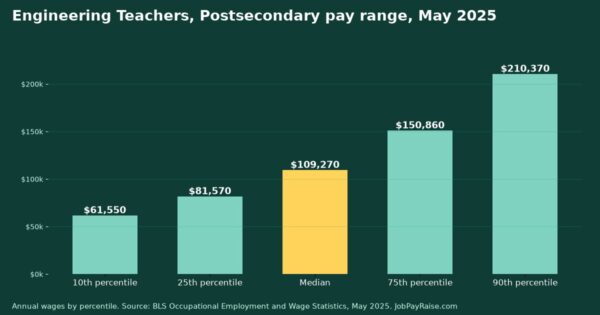
How Much Do Engineering Teachers, Postsecondary Make? 2025 Pay by Percentile, State, City and Industry
What engineering teachers, postsecondary earn in 2025: median pay of $109,270 a year, the full pay range, top-paying states, metro areas and…
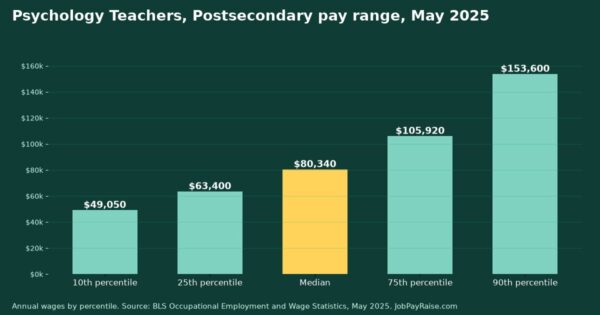
How Much Do Psychology Teachers, Postsecondary Make? 2025 Pay by Percentile, State, City and Industry
What psychology teachers, postsecondary earn in 2025: median pay of $80,340 a year, the full pay range, top-paying states, metro areas and…